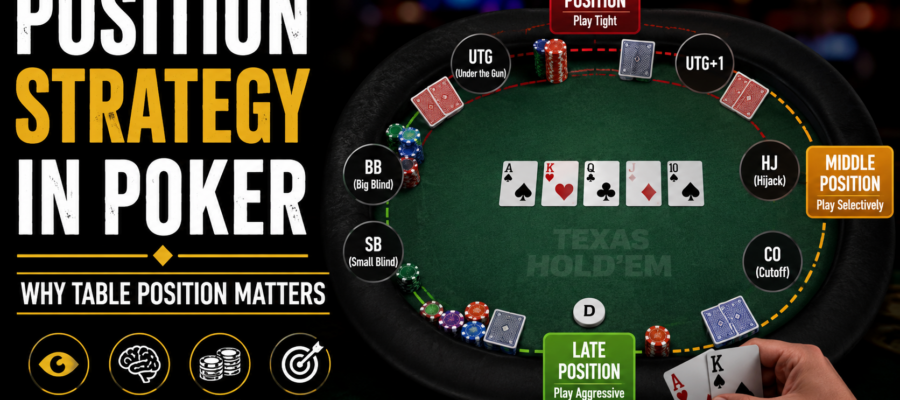
Poker is often described as a game of skill, patience, and decision-making. While many players focus on learning hand rankings or bluffing techniques, one of the most important concepts is often overlooked—table position. Your position at the table can influence every decision you make, from the hands you choose to play to the amount you bet.
Professional poker players understand that position provides valuable information. Acting after your opponents allows you to observe their decisions before making your own, giving you a significant strategic advantage. Whether you play online or in a live setting, learning how to use position effectively can improve your long-term results.
What Is Table Position in Poker?
Table position refers to the order in which players act during a betting round. Since poker is played clockwise, some players must act before others. The later you act, the more information you have about your opponents’ actions.
Poker positions are generally divided into three categories:
Early Position (EP)
Players seated immediately after the dealer button are considered to be in early position. They must act first before most other players.
Because there is limited information available, players in early position should usually play stronger starting hands and avoid unnecessary risks.
Middle Position (MP)
Middle position offers a bit more flexibility. By this point, several players have already acted, making it easier to judge the strength of the table.
Players can begin expanding their starting hand range slightly while still maintaining discipline.
Late Position (LP)
Late position is widely regarded as the most powerful place at the poker table. This includes the cutoff and the dealer button.
Players acting last can observe betting patterns, identify weakness, control the size of the pot, and make more informed decisions.
Why Position Matters So Much
Position provides information, and information leads to better decisions.
Imagine holding the same cards in two different situations. If you act first, you have to guess what your opponents might do. If you act last, you already know how everyone else has played the hand before making your decision.
This advantage helps players:
- Make more accurate betting decisions.
- Bluff more effectively.
- Control pot size.
- Avoid expensive mistakes.
- Maximize value from strong hands.
Over hundreds or thousands of hands, these small advantages add up significantly.
Playing Strong Hands from Early Position
Early position requires patience.
Since multiple players are still waiting to act behind you, weak starting hands become much riskier. Many experienced players recommend sticking to premium holdings such as:
- High pocket pairs
- Strong Broadway cards
- Premium suited combinations
Playing tighter from early position reduces unnecessary losses and keeps your overall strategy balanced.
Expanding Your Range in Late Position
Late position allows players to open a wider variety of hands because fewer opponents remain to act.
This creates opportunities to:
- Steal blinds.
- Apply pressure.
- Play speculative hands with better odds.
- Extract more value after the flop.
The dealer button is often considered the most profitable seat because it acts last after the flop on every betting round.
Position and Bluffing
Successful bluffing depends heavily on timing and information.
Players acting in late position can see whether opponents show weakness by checking or making small bets. These situations often create profitable bluffing opportunities.
Bluffing from early position, however, is much riskier because several players still have the opportunity to call or raise.
Position doesn’t guarantee a successful bluff, but it greatly improves the chances of making the right decision.
Pot Control Through Position
Another overlooked advantage is pot control.
When acting last, players can decide whether to:
- Keep the pot small with medium-strength hands.
- Build a larger pot with premium hands.
- Take a free card when appropriate.
This flexibility is much harder to achieve when acting first.
Reading Opponents More Effectively
Poker is a game of information.
Watching how opponents bet before it’s your turn provides valuable clues about the strength of their hands.
Questions you can answer include:
- Did someone raise aggressively?
- Did multiple players check?
- Is someone showing hesitation?
- Has a player suddenly become more aggressive?
These observations make later-position decisions more accurate and profitable.
Common Position Mistakes Beginners Make
Many newer players underestimate how much position affects profitability.
Some common mistakes include:
Playing Too Many Hands Early
Loose play from early position often leads to difficult post-flop decisions.
Ignoring the Dealer Button
Some players treat every seat the same. In reality, the dealer button offers one of the biggest strategic advantages in poker.
Bluffing Without Position
Bluffing while acting first frequently results in getting called or raised because opponents still have the final decision.
Overvaluing Medium Hands
Hands like weak aces or medium suited connectors can become expensive when played out of position.
Position Strategy for Online Poker
Online poker moves much faster than live games, making positional discipline even more important.
Many successful online players organize their strategy around position rather than specific cards.
If you’re exploring poker strategies, tournament formats, and online gaming insights, resources like online poker guides on CricBet99 provide useful information for players looking to better understand modern poker gameplay and strategy.
Improve Your Poker Decision-Making
Position alone won’t guarantee consistent wins, but combining good position with disciplined bankroll management, careful hand selection, and emotional control creates a much stronger overall strategy.
Studying positional play is one of the highest-return investments any poker player can make because it improves decision quality in nearly every hand.
Frequently Asked Questions
1. What is the best position in poker?
The dealer button is generally considered the strongest position because it acts last after the flop, providing the most information before making decisions.
2. Why is late position more profitable?
Late position allows players to observe opponents’ actions before deciding whether to bet, call, raise, or fold.
3. Should beginners play fewer hands in early position?
Yes. Playing stronger starting hands from early position reduces difficult situations and helps beginners avoid costly mistakes.
4. Does position matter in online poker?
Absolutely. Position is just as important online as it is in live poker, and many winning strategies are built around positional advantages.
5. Can position improve bluffing success?
Yes. Bluffing is generally more effective in late position because players have more information about their opponents’ intentions.
Final Thought
Understanding table position is one of the fastest ways to improve your poker strategy. While strong cards certainly matter, making decisions with more information is often even more valuable. Players who consistently respect position tend to make smarter bets, avoid unnecessary risks, and capitalize on profitable opportunities throughout a session.
Whether you’re new to poker or refining your existing strategy, treating table position as a core part of your game will help you make more confident decisions over the long run. Mastering this single concept can create a noticeable difference in both your consistency and overall performance at the poker table.